Learn
The prophet Micah, the house and the other way home: 10 details of the Magi story hardly anyone remembers
The story of the Magi takes up just twelve verses of Matthew’s Gospel, and most of us think we know it by heart: three kings, three camels, a stable. But Matthew mentions no kings and no camels, never says there were three and does not bring them into a stable but into a house. What he does tell us is more interesting: a forgotten prophecy, priests who knew the answer and did not go, a dream and a journey home by another way.
10 min read
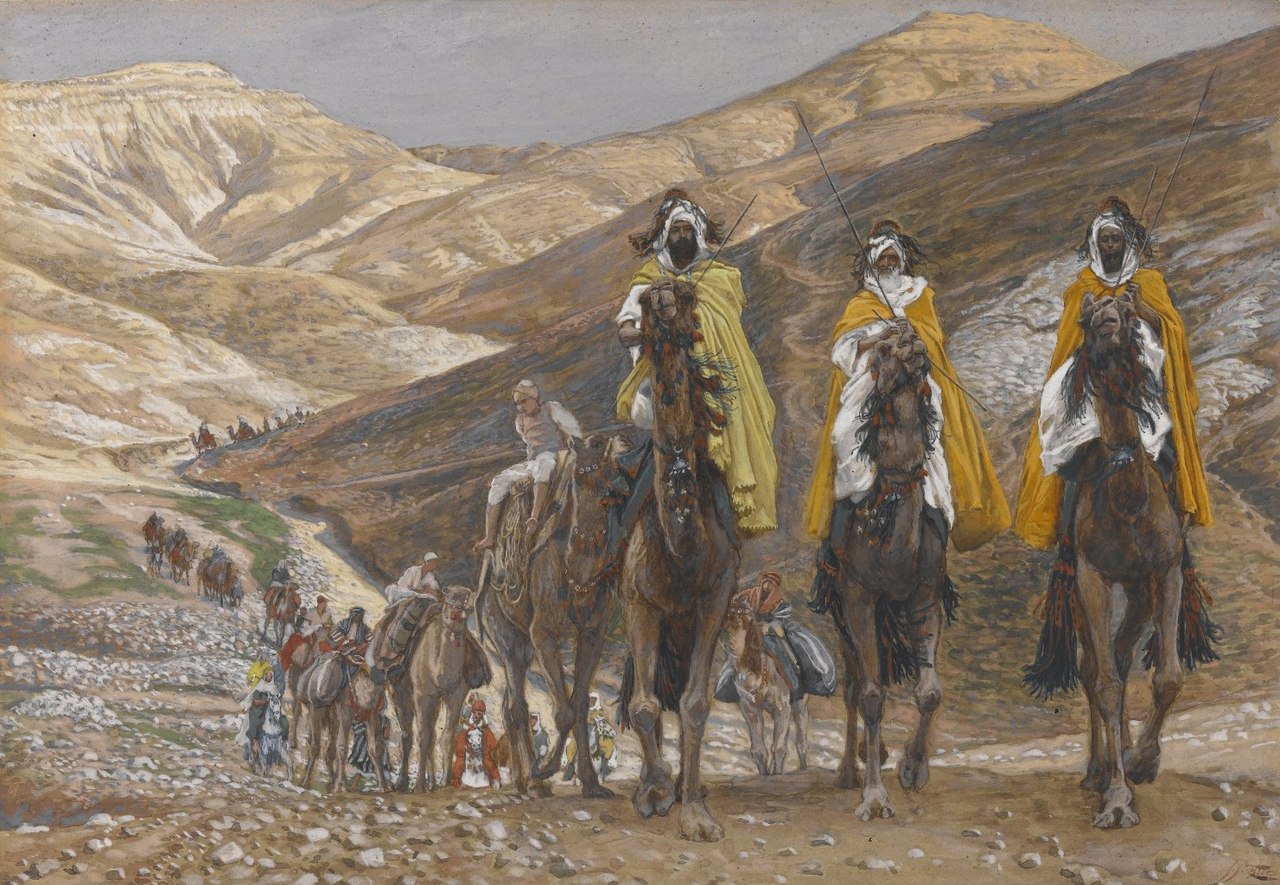
Twelve verses and a great deal of tradition
It was one of the questions in the Mustard Seed of 10 November: “Name something or someone in the story of the Magi (Matthew 2)”. We accepted the people, places and objects of Matthew 2:1-12, the gifts, the act of worship and also the traditional names of the Magi, Melchior, Caspar and Balthazar, even though they are not in the Bible. The camel did not count, because there isn’t one in Matthew 2. And anyone who answered “manger” got only part of the points, with a note: in Matthew the Magi find the Child in a house (Matthew 2:11).
It is one of those stories we know better from carols, cribs and Twelfth Night than from reading the Gospel itself. That is why the day’s rare answers were details that are right there in the text and that hardly anyone remembers. Here is how they ranked, from the rarest to the most common.
1. The prophet Micah
This was the rarest answer of the day. When the Magi arrived in Jerusalem asking about the king of the Jews, Herod called together the chief priests and the scribes to find out where the Messiah was to be born. The answer came at once: in Bethlehem of Judea, “for thus it has been written through the prophet” (Matthew 2:5). Matthew does not give his name, but the quotation comes from the book of Micah (Micah 5:1), a country prophet of the eighth century before Christ and a contemporary of Isaiah.
The prophecy is almost a paradox: Bethlehem was a small village, about five miles from Jerusalem, and yet from it would come the one who was to shepherd Israel. It was also the town of David, the shepherd king. Matthew, writing for Jewish readers, wants us to notice that even the place of Jesus’ birth had been foretold in Scripture, and that the foreigners came guided by a star but needed the Word of God to find the exact road.
2. The house
This is the detail that most surprises people reading the story for the first time: “on entering the house they saw the child with Mary his mother” (Matthew 2:11). Matthew says nothing about a stable or a manger. The manger belongs to Luke (Luke 2:7), who in turn never mentions the Magi. Our cribs put the two accounts together in a single scene, and there is nothing wrong with that, but it is worth knowing that they are two different moments.
How long passed between the birth and the visit? The Gospel does not say. One clue is that Herod, realising he had been deceived, ordered the killing of the boys of Bethlehem “two years old and under”, in keeping with the time he had found out from the Magi (Matthew 2:16). That is why many commentators think they may have arrived months after the birth, when the Holy Family was already living in a house in Bethlehem. It is a reasonable deduction, not something the text states.
3. Another way home
The story ends with a simple sentence: the Magi “departed for their country by another way” (Matthew 2:12). On the level of events, it was a way of avoiding Herod, who had asked them to come back and tell him where the child was, on the pretext that he too wanted to go and worship him.
The Fathers of the Church saw more in it. St Gregory the Great, in a homily for the Epiphany, read it as an image of conversion: whoever has met Christ can no longer go home by the same road he came. It is one of the Gospel phrases most often quoted on retreats, and rightly so: an encounter with Jesus never leaves the route unchanged.
4. A dream
The Magi do not take another road on a hunch: they were warned in a dream not to go back to Herod (Matthew 2:12). It is one of five dreams in the first two chapters of Matthew. The other four belong to Joseph: the one that tells him to take Mary into his home (Matthew 1:20), the one that sends him fleeing to Egypt (Matthew 2:13), the one that tells him he may return (Matthew 2:19-20) and the one that leads him to settle in Galilee (Matthew 2:22).
In the Bible, dreams are one of the ways God guides his people when the danger is great and there is no time for explanations. The first Joseph, the son of Jacob, was also a man of dreams. Matthew tells the story of Jesus’ infancy as one in which God protects his Son through people who listen and obey in silence, without saying a single word in the whole account.
5. The East
Matthew says only that they were “magi from the east” (Matthew 2:1). The Greek word mágoi originally referred to a priestly caste among the Persians and Medes, known for interpreting dreams and watching the stars. Over time it also came to mean a sage, an astrologer and even a sorcerer: the Acts of the Apostles uses it for Simon Magus (Acts 8:9) and for a false prophet called Elymas (Acts 13:6-8).
Exactly which country they came from the Bible does not say. Some picture them coming from Persia, others from Babylon, which had a long tradition of astronomy and a Jewish community dating from the Exile, and others from Arabia, because of the gold and frankincense. What matters to Matthew is something else: they are Gentiles, people from outside Israel, and they are the first to worship the Child.
6. The chief priests and the scribes
They are the most unsettling characters in the story. Herod summons them and they know the answer without hesitation: the Messiah is to be born in Bethlehem (Matthew 2:4-6). Nobody knew the Scriptures better. Yet the Gospel does not say that any of them made the five-mile journey from Jerusalem to Bethlehem to see whether it was true.
The contrast is deliberate. Those who came from far away, with imperfect knowledge, walked all the way; those who had the Bible in their hands stayed at home. Benedict XVI, in his book on the infancy of Jesus, points to that contrast as a warning for believers of every age: it is possible to know a great deal about God without ever setting out towards him.
7. Melchior, Caspar and Balthazar
No Gospel gives their names. They first appear in texts and works of art from the early Middle Ages. In the basilica of Sant’Apollinare Nuovo in Ravenna, a sixth-century mosaic shows the three Magi in Phrygian caps and Persian-style trousers, with a name written above each one: Balthassar, Melchior and Gaspar. A Latin chronicle known as the Excerpta Latina Barbari, translated from a Greek original of around the year 500, calls them Bithisarea, Melichior and Gathaspa.
Later tradition gave them ages and features: Melchior as an old man with a white beard offering gold, Caspar as a young man offering frankincense and Balthazar as a dark-skinned man offering myrrh, a way of saying that every age and every people on earth comes to worship Christ. According to legend, their remains reached Milan and from there, in 1164, Cologne, where they are still venerated in a great golden shrine in the cathedral. This is tradition and legend, not Scripture, and it is worth keeping the two apart.
8. Jerusalem
The Magi followed the star, but they went first to the obvious place to look for a king: the capital. There they asked openly, “Where is the newborn king of the Jews?” (Matthew 2:2). The question could hardly have landed worse. Herod was king of the Jews, appointed by Rome, and notorious for getting rid of anyone who threatened his throne, including several of his own sons.
Matthew says that when Herod heard it he was greatly troubled, “and all Jerusalem with him” (Matthew 2:3). It is striking: the holy city is shaken by news of the Messiah, while the foreigners rejoice. The same Gospel will show Jerusalem in turmoil again when Jesus rides into it on a donkey, shortly before his Passion (Matthew 21:10).
9. They worshipped him
The Magi said from the start why they had come: “we saw his star at its rising and have come to do him homage” (Matthew 2:2). And when they finally found the Child, “they prostrated themselves and did him homage” (Matthew 2:11). The Greek verb, proskynéo, describes kneeling and touching the ground with one’s forehead before a king or before God. It is the very gesture Herod claims he wants to make, as a lie.
That is why the Church calls this feast the Epiphany, which means manifestation. The Catechism explains that in the Magi from the East the pagan nations recognise Jesus as Messiah, Son of God and Saviour of the world, and enter the family of the patriarchs (Catechism, 528). They are the first fruits of all of us who, not being of the people of Israel, have come to believe in Christ.
10. Mary his mother
In the scene of the Magi, Matthew names only one person besides the Child: “they saw the child with Mary his mother” (Matthew 2:11). Joseph, who is the main character of the first two chapters of this Gospel, does not appear in that verse. Mary says nothing, but she is there, holding the Child and showing him to those who arrive.
Countless paintings of the Adoration of the Magi show her like that, seated, with the Child on her lap as on a throne. It is a good image of what Mary always does: she does not keep her Son to herself, she presents him. Whoever looks for Jesus, as the Magi did, finds him in her arms.
And the best-known
- Myrrh: was the answer given most often. It is a bitter, fragrant resin used in perfumes and for embalming the dead. St Irenaeus, in the second century, already read it as a sign of Jesus’ death, and it reappears in his Passion: he is offered wine mixed with myrrh on the cross (Mark 15:23) and Nicodemus brings myrrh and aloes for his burial (John 19:39).
- Herod: the Great, king of Judea under Roman authority, builder of the great Temple and a cruel ruler. After the Magi’s visit he had the boys of Bethlehem killed (Matthew 2:16-18), the Holy Innocents whom the Church remembers on 28 December. He died soon afterwards, in 4 BC according to most historians.
- The star: guided the Magi and came to rest over the place where the Child was (Matthew 2:9-10). Many explanations have been put forward, such as the conjunction of Jupiter and Saturn in 7 BC calculated by Kepler, but the Gospel is not trying to give us an astronomical fact: it is saying that even the heavens announce Christ.
- Gold and frankincense: complete the three gifts. Gold is the gift for a king; frankincense, burned in the Temple, is the gift for God. Isaiah had already foretold that people would come from Sheba bearing gold and frankincense (Isaiah 60:6).
- Bethlehem, the Child Jesus and the gifts: are the heart of it all: the town of David, the Child they are looking for and the treasure chests they open before him.
And something for next time: the camels are not in Matthew 2. They found their way into cribs from Isaiah, who speaks of caravans of camels and dromedaries coming from Sheba (Isaiah 60:6), just as the idea that they were kings comes from Psalm 72, where the kings of Tarshish, Sheba and Arabia bring tribute to the Messiah.
By another way
The Magi did not have all the information. They had a star, a question and a willingness to walk. They lacked the Scriptures, and found them in Jerusalem; they did not know whom to beware of, and God told them in a dream. They arrived because they never stopped searching.
If you set up a crib this year, leave the Magi some way off at first and move them a little closer each day until 6 January, as many families do. And meanwhile make the journey yourself: think of a gift, however small, you could bring Jesus this week, and ask him to teach you to go home by another way.
Play today’s Mustard Seed
Seven prompts about the Bible, the saints and the Church, 30 seconds each. The rarer your correct answer, the more it’s worth.
Plant your seedHow to play →Frequently asked questions
- Were the Three Wise Men kings?
- Matthew does not say so: he calls them magi from the east, a word for Persian sages and priests who watched the stars. The idea that they were kings arose very early, from reading the story alongside Psalm 72 and Isaiah 60, which speak of kings and nations bringing gifts to the Messiah.
- Were there three Wise Men?
- The Bible does not say how many there were. Tradition counted three because of the three gifts: gold, frankincense and myrrh. Some early catacomb paintings show two or four, but three eventually became the number in the West.
- When did the Magi visit Jesus?
- The Gospel does not say. Matthew tells us they found him in a house (Matthew 2:11) and that Herod had the boys of two and under killed according to what he had learned from them (Matthew 2:16), so many think they arrived some time after the birth. The Church celebrates their visit at the Epiphany, on 6 January.
- What do gold, frankincense and myrrh mean?
- Since St Irenaeus in the second century, the most common reading is that gold acknowledges Jesus as king, frankincense as God, and myrrh, which was used for embalming, as the man who would die for us.